AI SUMMARY
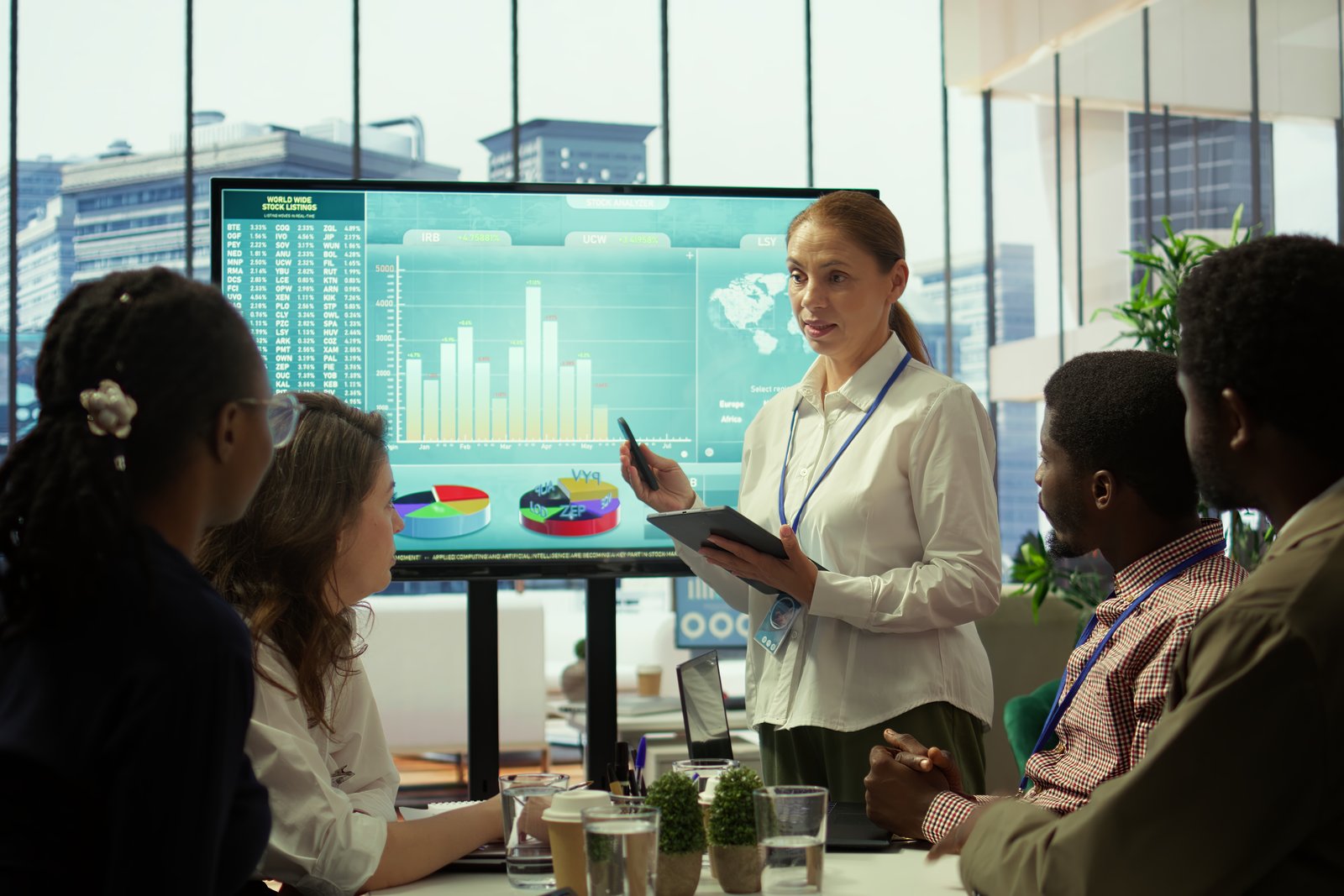
AI employee monitoring uses artificial intelligence to analyze time, attendance, application usage, and activity data so managers can spot productivity patterns, workload problems, and compliance risks faster than they could by reading reports line by line.
Most teams already track time and activity. What AI adds is interpretation. Instead of a list of hours and apps, managers get trends, anomalies, and alerts that show where work is slowing down and who may be overloaded.
That added capability raises the stakes. The more a system interprets employee data, the more important it becomes to explain what is collected, keep people in charge of decisions, and follow a growing set of US and EU rules. This guide covers how AI is changing monitoring, what to measure, and what employee monitoring compliance looks like right now.
Key Takeaways
- AI employee monitoring turns time, attendance, app, and activity data into trends, anomalies, and alerts instead of a plain hours-and-apps log.
- An OECD survey found 90% of US firms use at least one algorithmic management tool, versus a 79% average across France, Germany, Italy, and Spain.
- Activity data works best paired with outcomes such as tasks completed, quality, and cycle time, not read on its own.
- US compliance is tightening: Connecticut's expanded electronic monitoring notice rules take effect October 1, 2026.
- The EU AI Act's high-risk obligations for worker-monitoring systems now apply from December 2, 2027, under the Digital Omnibus amendments.
- Transparent tracking, clear purpose limits, and human review of every AI flag deliver the most value at the lowest compliance risk.
What Is AI Employee Monitoring?
AI employee monitoring combines standard workforce data with machine learning and analytics. The data itself is familiar: clock-in and clock-out times, active and idle time, app and website usage, and, where enabled, screenshots. The AI layer looks across that data to surface patterns a manager would likely miss in a weekly report.
Traditional monitoring answers direct questions. Was this employee online? How many hours were logged? Which apps were used?
AI-assisted monitoring can answer broader ones. Which team is consistently working late? When does focus time drop across the company? Which workflows create the most context switching? Which login pattern looks unusual for this account?
Adoption is already high. An OECD survey of more than 6,000 mid-level managers found that 90% of US firms use at least one algorithmic management tool to instruct, monitor, or evaluate workers. The average across the European countries surveyed (France, Germany, Italy, and Spain) was 79%.
| Monitoring Area | Standard Tracking | AI-Assisted Tracking |
|---|---|---|
| Attendance | Clock-in and clock-out times | Late-start, absence, and overtime patterns across teams |
| Time and activity | Active and idle time per day | Focus trends and early signs of overwork or disengagement |
| App and website usage | Time spent per app | Context switching and tool usage by role |
| Screenshots | Periodic visual records | Reviewed only when an alert or pattern needs context |
| Security | Fixed rules | Alerts on unusual access or login behavior |
| Workload | Hours per person | Imbalances across teams, projects, and weeks |
How Is AI Changing the Way Companies Measure Productivity?
Generative AI tools have changed how long tasks take. A support agent who drafts replies with an approved AI assistant may close more tickets while typing less. A marketer who used to spend four hours on a first draft may now spend 45 minutes on it and use the rest of the afternoon for editing and planning.
A manager who looks only at activity levels could read both employees as less busy. In practice, both are producing more.
Workers notice the difference too. In OECD surveys of finance and manufacturing workers who use AI, four in five said it improved their job performance. The same research found that most workers whose employers collected data through AI felt more pressure to perform, and many worried about their privacy.
None of this makes activity data useless. Time, attendance, and activity records are still the foundation for payroll accuracy, client billing, capacity planning, and spotting disengagement early. What changes is how the data gets read: as context next to results, rather than as the result itself.
Pairing Activity Signals With Outcomes
| Activity Signal | What It Can Tell You | Outcome to Pair It With |
|---|---|---|
| Hours tracked | Capacity and overtime risk | Tasks or projects completed |
| Active and idle time | Engagement trends over weeks | Quality of finished work |
| App and URL usage | Where time goes, by tool | Cycle time for key workflows |
| Focus time | Room for deep work | Deadlines met |
| Attendance patterns | Reliability and scheduling gaps | Coverage and service levels |
| Context switching | Interruptions and tool overload | Rework and error rates |
The right outcome depends on the role:
- Software developers: Low keyboard activity during architecture planning or debugging is normal. Pair tracked time with merged pull requests, resolved bugs, and review turnaround.
- Customer support: Pair active time with tickets resolved, first-response time, and customer satisfaction scores.
- Agencies and consultancies: Pair tracked time with billable utilization and project margins, so the same data supports accurate client billing.
- Finance and accounting teams: Hours inside spreadsheets or accounting software say little by themselves. Close-cycle time, reconciliation exceptions, and rework are stronger indicators.
Where Does AI Employee Monitoring Help Most?
Used with clear goals, AI-assisted monitoring is most valuable in four areas.
1. Workload Balancing and Burnout Prevention
Patterns such as repeated late sessions, shrinking breaks, or one person carrying a team's overtime are easy to miss day to day. AI can flag them early, which gives managers a chance to rebalance work before it turns into attrition.
2. Attendance and Overtime Accuracy
Automatic time capture and attendance analytics reduce timesheet errors and make overtime visible before payroll closes. For hourly and nonexempt staff, accurate records also support wage and hour compliance. Prodaff's guide to overtime tracking tools covers this in more detail.
3. Visibility for Remote and Hybrid Teams
Managers of distributed teams can't gauge a day by walking past desks. Trend dashboards and activity heatmaps show when teams are most engaged, so leaders can protect focus hours and schedule meetings around them.
4. Process Bottlenecks
Consider a recurring pattern on an accounting team: export data from the accounting system, reconcile it in Excel, correct errors by hand, wait for manager approval, then re-enter the results. Viewed one employee at a time, this looks like someone spending three hours a day in a spreadsheet. Viewed across the team, it points to a process that needs an integration or a better template.
How Do Employee Monitoring and Compliance Connect?
Monitoring can support compliance, for example by documenting hours for overtime rules or detecting unauthorized access to client data. The monitoring program also has to be compliant in its own right. As AI takes on more interpretation, that second requirement carries more weight.
Key Risks of AI Employee Monitoring
- Employee privacy and data protection
- Collecting more data than the stated purpose requires
- Inaccurate inferences, such as reading deep work as idle time
- Opaque productivity scores employees can't see or question
- Algorithmic bias against certain roles, schedules, or groups
- Keeping monitoring data longer than needed
- Weak security around the monitoring data itself
- Employment decisions made without human review
These risks grow quickly once monitoring data feeds into pay, promotions, discipline, or termination.
What Laws Apply to Employee Monitoring in the US?
There is no single federal employee monitoring law. The Electronic Communications Privacy Act (ECPA) generally allows employers to monitor company-owned systems for legitimate business purposes, and state laws add notice, consent, and privacy requirements on top of that. These are the ones most US employers ask about:
| Law | Where | What It Requires |
|---|---|---|
| Civil Rights Law Section 52-c | New York | Written notice of electronic monitoring at hiring, employee acknowledgment, and a notice posted in the workplace |
| Gen. Stat. Section 31-48d, updated by Public Act 26-73 | Connecticut | Prior written notice of the types of monitoring and a posted notice. From October 1, 2026, employers must also name the specific on-premises locations where monitoring may occur and post notices there |
| 19 Del. C. Section 705 | Delaware | Notice before monitoring email, internet, or phone use, with employee acknowledgment |
| CCPA as amended by CPRA | California | Employees have consumer privacy rights, including notice at collection and the right to know, correct, and delete personal data |
| Biometric Information Privacy Act (BIPA) | Illinois | Written consent before collecting biometric data, such as fingerprint or face scans used for clock-in |
| Local Law 144 | New York City | Bias audits and candidate or employee notice before using automated tools in hiring or promotion decisions |
Requirements depend on where employees work, not where the company is headquartered, and they change often. This section is a general overview, not legal advice, so review your monitoring policy with employment counsel before adding new AI features.
What Does the EU AI Act Mean for Employee Monitoring?
The EU AI Act treats certain AI systems used in employment as high-risk. That includes systems used to monitor and evaluate workers' performance and behavior, allocate tasks, or inform promotion and termination decisions. High-risk systems need risk management, technical documentation, human oversight, and transparency controls.
The timeline shifted this year. Under the Digital Omnibus amendments (Regulation (EU) 2026/1744), which entered into force on July 27, 2026, the high-risk obligations for these employment systems now apply from December 2, 2027 instead of August 2, 2026. Other parts of the Act are already in effect, so companies with employees or contractors in the EU should use the extra time to prepare.
A Practical Governance Checklist
| Control | Question to Ask |
|---|---|
| Purpose limitation | Why are we collecting this information? |
| Data minimization | Do we need every data point, or only some? |
| Transparency | Do employees understand what is monitored and why? |
| Access | Who can view employee-level data? |
| Retention | How long do we keep it, and who deletes it? |
| Accuracy | Can employees challenge an incorrect conclusion? |
| Bias testing | Are certain roles or groups flagged more often? |
| Human review | Can an AI flag trigger an employment decision on its own? |
| Auditability | Can we reconstruct and explain a decision later? |
The NIST AI Risk Management Framework organizes this work into four functions: Govern, Map, Measure, and Manage. Companies already running SOC 2, ISO 27001, or GDPR programs can fold workforce AI into those existing controls instead of building a separate process.
How Can Companies Build Trust Around Employee Monitoring?
More visibility doesn't automatically lead to better management. A developer thinking through a system design may barely touch the keyboard. An accountant researching a complicated revenue recognition question might spend an hour reading. A manager coaching a new hire could look idle to monitoring software. Each of these looks like inactivity in the data, and each is valuable work.
That's why transparency matters as much as the tool. Employees should know what is monitored, why, who can see it, how long it is kept, and whether it affects employment decisions. A few practices make a measurable difference:
- Publish a plain-language monitoring policy and collect acknowledgments, even in states that don't require them.
- Give employees access to their own time and activity data.
- Turn on features only where there is a clear purpose. For example, use screenshots for billable client work and keep them blurred or off elsewhere.
- Review every AI flag before acting on it.
- Talk to teams before rollout, not after.
That last point is backed by research. The OECD found that worker consultation and training are associated with better outcomes when companies introduce AI at work.
What Should Companies Measure in 2026?
Useful productivity measurement usually comes down to four questions.
1. Outcomes
Did the employee or team deliver the result the business needed?
2. Quality
Was the work accurate, compliant, and usable without rework?
3. Process Efficiency
How much waiting, rework, and manual effort sits inside the workflow?
4. Capacity
Did AI or automation free up time, and is that time going to higher-value work?
Answering these usually means connecting time and activity data with project management, HR, and payroll systems. Prodaff's guide to employee productivity reports shows how managers can build this view in practice.
What's Next for AI Employee Monitoring?
Over the next 18 to 24 months, expect monitoring reports to lean further toward team outcomes and workflow health, with individual activity scores playing a supporting role. As AI assistants and agents take on more tasks, companies will also need clear records of whether a piece of work was done by an employee, an AI system, or both. Employee-facing dashboards, written policies, and human review are likely to become standard expectations rather than extras.
Choosing a Monitoring Approach That Fits Your Team
AI is making employee monitoring more useful and more accountable at the same time. The teams that benefit most track only what they need, explain it clearly, pair activity with outcomes, and leave final decisions to people.
Prodaff's productivity monitoring features show how your team spends time, uses apps and websites, and manages attendance, all from one clear view. See how it works for your team with a 14-day free trial. Plans start at $5 per user.
Frequently Asked Questions
Yes, in general. Federal law allows employers to monitor company-owned devices and systems for legitimate business purposes. Several states add requirements. New York, Connecticut, and Delaware require notice of electronic monitoring, California gives employees privacy rights over their personal data, and Illinois requires consent before collecting biometric data.
In New York, Connecticut, and Delaware, yes. Employers must give written notice, and Connecticut's expanded rules take effect October 1, 2026. In other states notice may not be legally required, but a written, acknowledged policy is still the safest and most trusted approach.
It can, when the data is tied to outcomes. Monitoring works best when time and activity data are read alongside results such as tasks completed, quality, and cycle time, and when employees understand how the data is used.
Some uses are. AI systems used to monitor and evaluate workers, allocate tasks, or inform promotion and termination decisions fall under the Act's high-risk category. Those obligations now apply from December 2, 2027.
It depends on the tool and company policy. Many monitoring platforms let employees view their own time and activity data, and California employees have a legal right to know what personal information their employer collects. Giving employees access is widely considered best practice.